You checked your Apple Watch this morning, saw a big blue “Core” band next to smaller slivers of “Deep” and “REM,” and wondered what core sleep even is, and whether that much of it is a problem.
Short answer: on an Apple Watch, core sleep is just light sleep. It's Apple's label for the two lightest stages of non-REM sleep (called N1 and N2), and it normally makes up about half of your night. That's completely normal. If you've also found websites calling core sleep the “deep, essential” sleep, that's not a mistake you're making, it's because the term has two different meanings floating around.
Here's what core sleep actually is, why the definitions clash, how it differs from deep sleep, and how much you need.
What is core sleep?
Core sleep is Apple's name for light non-REM sleep, specifically stages N1 and N2. During these stages your heart rate slows, your body temperature drops a little, and your brain ticks over the day, all as you settle from wakefulness toward the deeper stages. As sleep physician Dr. Raj Dasgupta explained to Parade, “core sleep” on an Apple Watch refers to N1 and N2, which most other contexts simply call light sleep.
To place it, a normal night moves through four stages, over and over: N1 (drifting off), N2 (light sleep), N3 (deep sleep), and REM (dreaming). Apple groups N1 and N2 together as “core,” keeps N3 as “deep,” and keeps REM as “REM.” So core sleep isn't a special or separate kind of sleep. It's the light-sleep portion, relabeled.
What does core sleep mean on an Apple Watch?
On your Apple Watch, core sleep means the light-sleep block (N1 plus N2), and it's largely an Apple-only term. Apple bundles N1 and N2 together because the watch's sensors, movement, heart rate, and blood oxygen, can't cleanly tell those two light stages apart the way a lab EEG can. So it lumps them into one category.
Why “core” and not “light”? Apple made a deliberate branding choice. As BetterSleep notes, Apple said it picked “core” to avoid the impression that this sleep is unimportant, the way “light” might sound. The catch is that this is essentially an Apple-only word. Fitbit, Oura, Garmin, and Samsung all call the same thing “light” sleep. So if you switch trackers and “core” disappears, nothing changed but the label.
Core sleep vs deep sleep: what's the difference?
Core sleep and deep sleep are different stages with different jobs. Core (N1 and N2) is light sleep and makes up the bulk of the night. Deep sleep (N3) is the hardest stage to wake from and is when your body does its physical repair work.
Here's the simple breakdown:
- Core sleep (N1 + N2): Light sleep. The foundation and the majority of your night, roughly 50 percent. Your body eases down and transitions between other stages here.
- Deep sleep (N3): The deepest, most physically restorative stage, tissue and muscle repair, immune support. Dr. Dasgupta notes this is the physically restorative one. It's concentrated in the first half of the night and is usually a small slice; the average Apple Watch user logs about 49 minutes, roughly 13 percent of sleep.
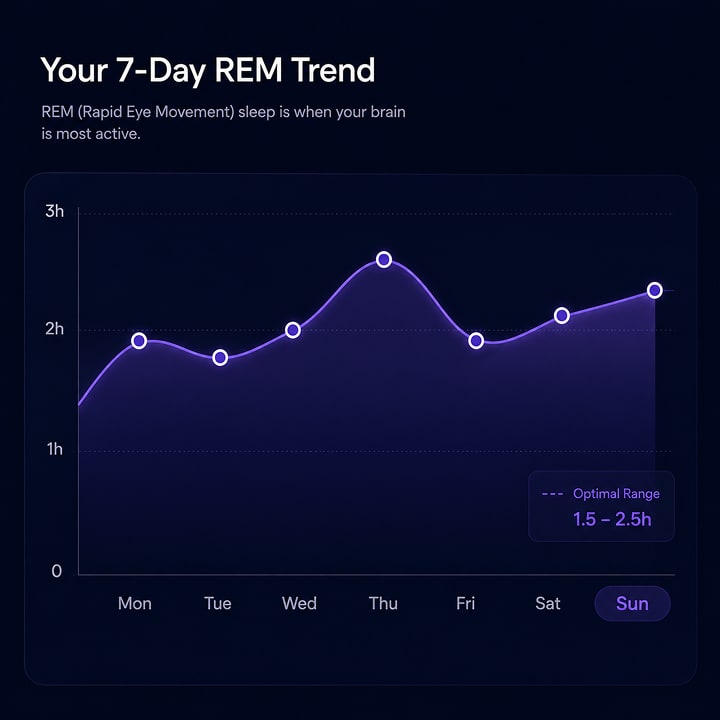
- REM sleep: The dreaming stage, important for memory and emotional processing. It's separate from both core and deep, and it lengthens toward morning, usually around 20 to 25 percent of the night.
One thing to let go of: “core” does not mean “most important.” On an Apple Watch it's the light stuff. The stages people usually watch for quality are deep and REM.
Why do some sites say core sleep is the “deep, essential” sleep?
Because “core sleep” also has an older, separate meaning in sleep science, and it's roughly the opposite of Apple's. In that academic sense, core sleep refers to the essential, must-have portion of the night, the first several hours that carry most of your deep sleep, as opposed to lighter “optional” sleep later on.
That's why a search for “core sleep” turns up pages that seem to contradict each other. Some describe light sleep (Apple's meaning), others describe the essential deep-sleep-rich block (the scientific meaning). Neither is exactly wrong; they're just using the same two words for different things. Since the reason you're probably here is the word on your watch, the Apple definition, core equals light, is the one that applies to your sleep data.
How much core sleep do you need?
There's no core-sleep target to chase, and that's the honest answer. Because core sleep is simply your light-sleep stages, it naturally makes up about half of a normal night, and that large share is healthy, not a red flag.
What actually matters is your total sleep and whether you're getting enough of the more restorative stages. Aim for the recommended seven to nine hours of total sleep for adults, and pay more attention to your deep and REM trends than to the core number. If you sleep enough on a consistent schedule, the stages sort themselves out. Trying to “increase core sleep” specifically isn't really a meaningful goal.
Is core sleep good, and how accurate is the reading?
Yes, core sleep is good and completely normal, it's the base layer that the rest of your night is built on, and a big core percentage is exactly what a healthy night looks like. The bigger caveat is how much to trust the exact numbers.
Your watch estimates sleep stages from movement and heart signals, not brain waves, so treat the readings as approximations. A 2025 study comparing popular wearables to clinical sleep testing found the Apple Watch had the best agreement of the devices tested, but even then its stage accuracy was around 83 percent for core/light sleep, 69 percent for REM, and just 51 percent for deep sleep. The useful move is to watch trends over weeks rather than fixating on any single night. And if you're persistently exhausted, snore heavily, or your deep sleep looks consistently very low, that's a conversation for a doctor, not your watch.
FAQ
Is core sleep or REM sleep better?
Neither is “better”, they do different jobs. Core (light) sleep is the foundation and most of your night, while REM supports memory and emotional processing. You need both, along with deep sleep. Rather than ranking them, aim for enough total sleep so each stage gets its share.
How much REM, core, and deep sleep should you get?
Roughly, core (light) sleep is about 50 percent of the night, REM about 20 to 25 percent, and deep sleep about 13 to 23 percent. These shift with age and vary night to night. You don't need to hit exact splits; getting 7 to 9 hours on a steady schedule is what gets you there.
What is the core sleep stage?
On an Apple Watch, the “core” sleep stage is light non-REM sleep, stages N1 and N2 combined. N1 is the brief drift-off phase, and N2 is the light sleep where you spend the largest part of the night. Apple groups them under one label because its sensors can't reliably separate them.
How many hours of core sleep do you need?
There's no set number. Since core sleep is about half of a normal night, someone sleeping eight hours might log roughly four hours of core, but that's a byproduct of total sleep, not a goal. Focus on total hours and your deep and REM trends instead.
If you take one thing from your Apple Watch data, don't worry about the big “Core” number, that's supposed to be big. Keep your total sleep in the healthy range, watch your deep and REM over time rather than night to night, and see a doctor if you're tired no matter what the watch says.