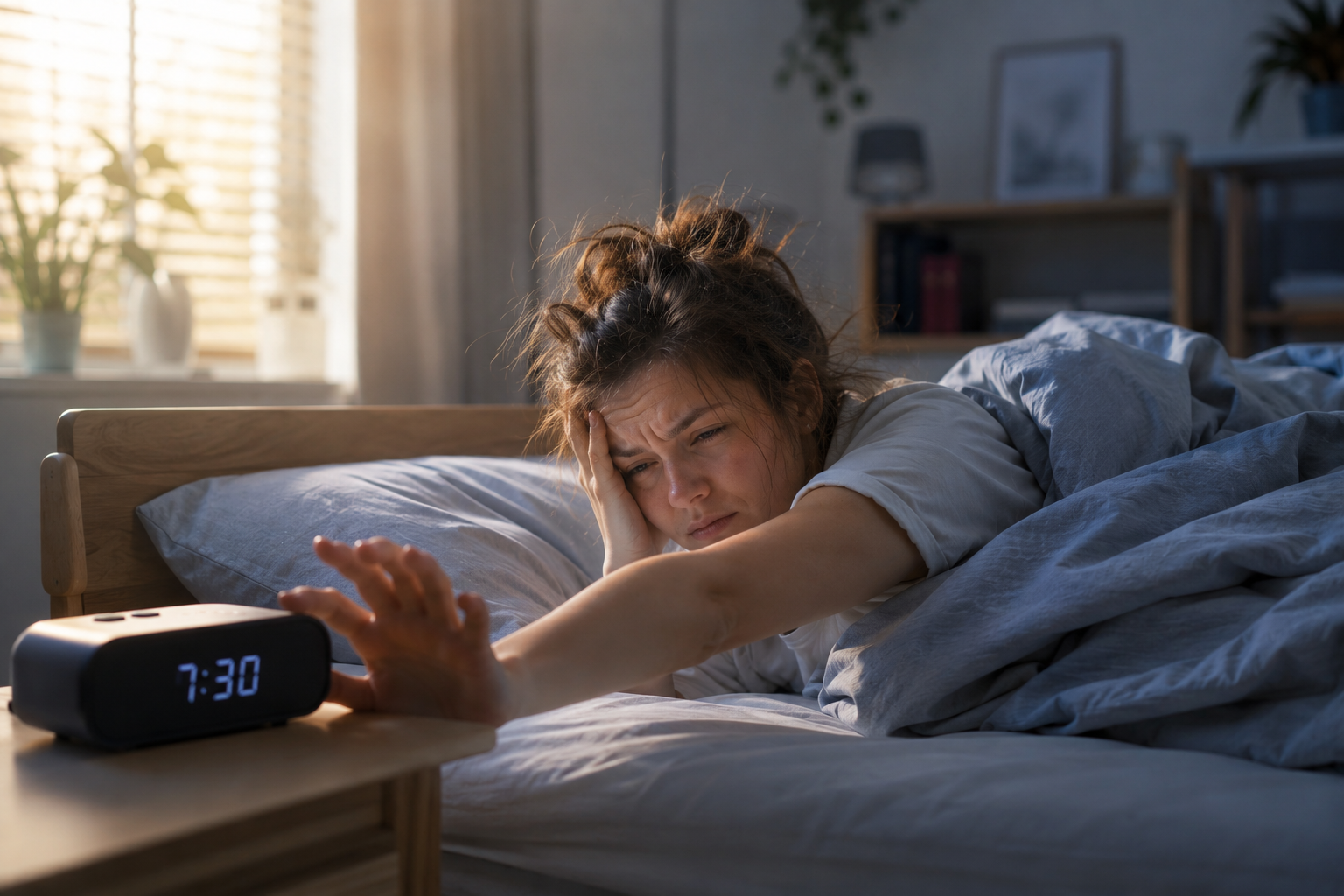
If you're hoping for a single answer, here's the honest one: there isn't a universally “best” sleeping position. As Harvard sleep specialists put it, the healthiest position has to be individualized, your body largely tells you what works. That said, there's a clear rule of thumb: side and back sleeping are generally healthier than stomach sleeping, and side sleeping is the best all-rounder for most people.
The reason it matters is that your position can quietly help or aggravate real things, snoring and sleep apnea, acid reflux, back and neck pain, even pregnancy comfort. So the useful question isn't “what's best?” but “what's best for me?” Here's how the three positions compare, which side to choose, and how to match your position to whatever you're dealing with.
The short answer: it depends, but side wins for most
Side and back sleeping both make it easier to keep your spine aligned, which lets your muscles relax and recover overnight. Stomach sleeping makes that harder and tends to strain the neck and lower back, which is why it lands at the bottom of nearly every expert's list.
For a quick default: if you have no specific issues, side sleeping is the safest all-around choice, and if you're a committed back sleeper who sleeps well and doesn't snore, that's fine too. Stomach sleeping is the one most worth moving away from. But the “best” position really shifts depending on your health, which the rest of this guide breaks down.
Side sleeping: the best all-rounder
Side sleeping is the most popular position, and for good reason. Lying on your side keeps your airway open, because your tongue and the soft tissues at the back of your throat don't collapse backward the way they do on your back. That makes it the go-to position for reducing snoring and easing obstructive sleep apnea. With the right pillow, it also supports a neutral spine and takes pressure off your lower back and hips. There's even some early (mostly animal) research suggesting side sleeping may help the brain clear waste overnight, though that's not settled science.
It isn't perfect. Side sleeping can put pressure on the shoulder and hip you're lying on, contributing to joint soreness, and pressing your face into the pillow night after night can encourage facial “sleep lines.” The fixes are simple: use a medium-to-high pillow that keeps your head level with your spine, tuck a pillow between your knees to keep your hips and pelvis aligned, and avoid curling into a tight fetal ball, which can strain the neck and lower back.
Back sleeping: great for posture, tough on snoring
Sleeping on your back has real advantages. It distributes your weight evenly, supports your spine and posture, and keeps your face off the pillow, which makes it the best position for avoiding facial wrinkles. Many people also find it comfortable for their lower back, especially with a pillow under the knees to preserve the natural lumbar curve.
The big drawback is breathing. Back sleeping is the worst position for snoring and obstructive sleep apnea, because gravity lets the soft tissue in your throat fall back and narrow the airway. It can also worsen acid reflux, and it can leave people with heart or lung conditions, or those carrying extra weight, feeling short of breath. And lying flat isn't recommended in the later months of pregnancy. Many of these downsides ease if you elevate the head of your bed by around six inches or use a wedge, which uses gravity in your favor.
Stomach sleeping: is it bad?
Stomach sleeping is the least recommended position, and the reason is mechanical. To breathe, you have to turn your head to one side for hours, which twists your neck, and the position tends to flatten and strain your lower back. Over time that can translate into neck and back pain, and the face-to-pillow contact contributes to wrinkles too.
It isn't all bad, keeping the airway open means stomach sleeping can actually reduce snoring for some people. But the neck and back costs usually outweigh that benefit, so if you have any neck or back pain, it's the first position to move away from. If you truly can't sleep any other way, soften the impact by using the thinnest possible head pillow (or none) and placing a thin pillow under your pelvis to reduce the arch in your lower back.
Which side should you sleep on, left or right?
If you're a side sleeper, the side you choose can matter, mainly for digestion and pregnancy.
For acid reflux or heartburn, the left side is best. Because of the way your stomach and esophagus are arranged, lying on your left keeps the stomach below the esophagus and makes it harder for acid to flow back up. Sleeping on your right side, or flat on your back, tends to make reflux worse. During pregnancy, the left side is also the widely recommended choice, the American College of Obstetricians and Gynecologists notes it improves circulation to the baby and relieves pressure on internal organs.
There's one nuance worth flagging: people with heart failure sometimes find the left side uncomfortable or even breath-limiting, and may do better on the right. If you have a heart condition, that's a good thing to raise with your doctor rather than following a general rule.
The best sleeping position for your situation
How to actually change your sleep position
Here's the frustrating catch: you can't consciously control your position once you're asleep, so “just sleep on your side” is easier said than done. The trick is to set yourself up to fall asleep in the target position and make it hard to drift out of it.
The most useful tools are pillows. Hugging a body pillow encourages and stabilizes side sleeping. Building a “wall” of pillows behind your back discourages rolling onto it, useful if you're trying to stop back sleeping for snoring. Some people use the old “tennis ball” trick, tucking something uncomfortable-to-lie-on into the back of a shirt, to break a back-sleeping habit. Give any switch one to two weeks (sometimes longer) before you judge it, and make sure your pillow height matches your position: medium-to-high for side, lower for back, very thin or none for stomach.
When to see a doctor
Sleep position is a helpful lever, but it isn't a treatment for an underlying condition. If you snore loudly, gasp or choke in your sleep, or feel exhausted no matter how long you were in bed, get evaluated for sleep apnea, positional changes can complement, but don't replace, treatments like CPAP or an oral appliance. Likewise, if you have chronic back or neck pain, a heart or lung condition, or questions about sleeping safely during pregnancy, it's worth individualizing the advice with a doctor rather than relying on a general rule.
Frequently asked questions
What is the healthiest sleeping position?
There's no single healthiest position for everyone, but side and back sleeping are generally considered healthier than stomach sleeping because they make it easier to keep your spine aligned. Side sleeping is the best all-rounder for most people; back sleeping is excellent for posture but worst for snoring. The truly best position is the one that keeps your spine neutral and suits your specific health needs.
Is sleeping on your stomach bad for you?
It's the least ideal position for most people. Turning your head to breathe twists the neck, and the position strains the lower back, which can lead to neck and back pain over time. It can slightly reduce snoring, but the trade-offs usually aren't worth it. If you can, gradually train yourself toward side sleeping using a body pillow.
What's the best sleeping position for sleep apnea?
Side sleeping. Lying on your side keeps the airway open and reduces the airway collapse that drives obstructive sleep apnea and snoring, while sleeping flat on your back makes it worse. That said, position is a supplement to, not a substitute for, medical treatment, if you have or suspect sleep apnea, see a doctor.
Should I sleep on my left or right side?
For acid reflux and during pregnancy, the left side is the better choice, it reduces backflow of stomach acid and improves circulation in pregnancy. For most other purposes, either side is fine, so go with what's comfortable. The main exception is some people with heart failure, who may prefer the right side and should ask their doctor.
The bottom line: don't stress about hitting one “perfect” position. Aim to keep your spine neutral, default to your side if you have no strong reason not to, use pillows to support and hold the position, and match your setup to whatever you're managing. If a health condition is in play, let your body, and your doctor, guide the final call.