Ever spent eight hours in bed and still woken up feeling wrung out? That's the difference between sleep quantity and sleep quality. You can log plenty of hours and still sleep badly if that sleep is broken, shallow, or inefficient. Quality is about how well you sleep, not just how long, and it's often the missing piece for people who “do everything right” and still feel tired.
The encouraging part is that sleep quality is measurable, and once you know what to look at, it's improvable. This guide covers what sleep quality actually is, the four signs experts use to judge it, how to check your own, what quietly wrecks it, and how to make it better.
What is sleep quality, and how is it different from quantity?
Quantity is simple: how many hours you sleep. Quality is about how restorative those hours are, whether you fall asleep in a reasonable time, stay asleep, and spend most of your time in bed actually sleeping rather than lying awake.
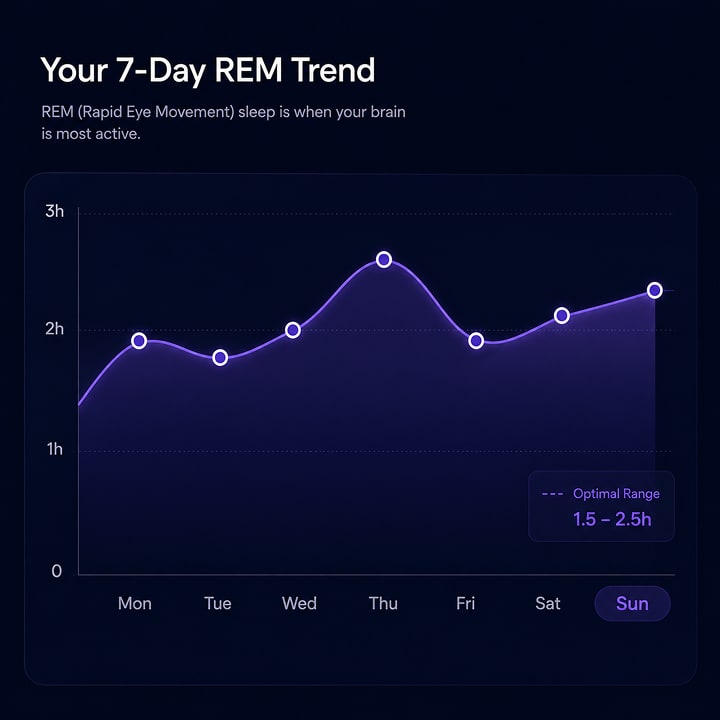
To pin it down, the National Sleep Foundation assembled an expert panel that reviewed 277 studies and agreed on four measurable indicators of good sleep quality. They're all about sleep continuity, how consolidated and uninterrupted your sleep is, rather than the exact mix of sleep stages. (Interestingly, the panel did not reach consensus that having more deep or REM sleep is, by itself, a reliable marker of quality, so be skeptical of tools that grade your night purely on stage percentages.)
The four signs of good sleep quality
Here are the four indicators, with the rough targets for a healthy adult:
Shorter time to fall asleep, fewer awakenings, less time awake in the night, and a higher proportion of time asleep all point to better quality, at every adult age. Sleep efficiency is the one most people have never heard of but is worth knowing: it's the percentage of your time in bed that you're actually asleep. Researchers consider 85% or higher a sign of good quality, while dropping below about 75% signals poor quality and has even been linked to worse health outcomes.
How to measure your sleep quality
You don't need a lab to get a useful read, though a lab is the gold standard: in-clinic polysomnography measures all four indicators precisely. At home, you have three practical options.
The simplest is honest self-assessment. After a night's sleep, ask yourself: Did I fall asleep within about half an hour? Did I stay asleep, with no more than one real awakening? Was I awake only briefly during the night? Did I feel rested? If you answer yes most of the time, your quality is probably good.
You can also estimate your sleep efficiency yourself. Divide the time you were actually asleep by the total time you spent in bed, then multiply by 100. Eight hours in bed with about seven hours of sleep, for example, is roughly 88%, solidly in the good range.
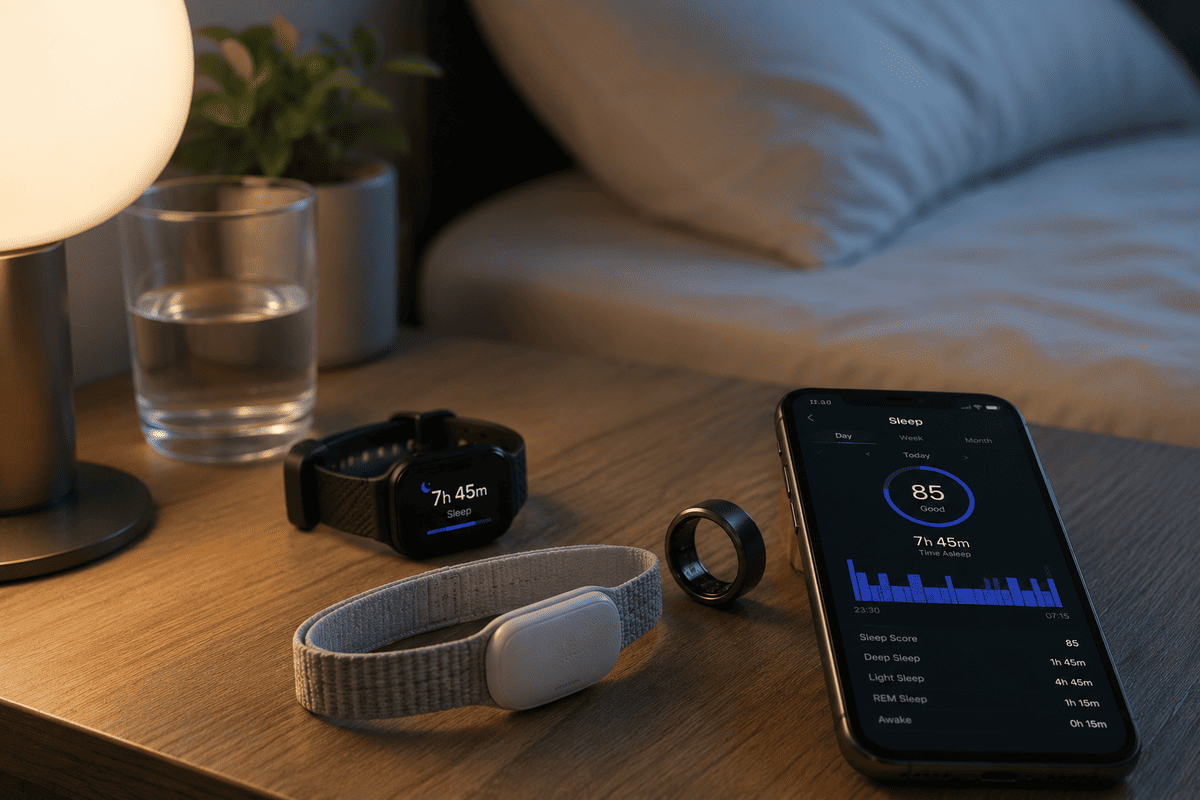
Finally, consumer sleep trackers and watches can estimate your latency, awakenings, and efficiency, and they're handy for spotting trends over time. Just treat their stage breakdowns (light, deep, REM) with caution, they're estimates, not clinical measurements, and can be inaccurate. Our guide on how much REM sleep you need explains why tracker stage data deserves a skeptical eye.
What hurts your sleep quality
Poor quality usually comes down to two things: your sleep gets fragmented (you wake up, even briefly, more than you should), or you spend more time in bed than your body can fill with sleep (which drags your efficiency down). Here are the usual culprits, and notice how each maps onto those indicators.
- Alcohol. A nightcap may help you fall asleep, but as your body processes it, alcohol fragments the second half of the night and suppresses REM, driving up awakenings and time awake.
- Late caffeine. With a half-life of about five to six hours, an afternoon coffee lengthens how long it takes to fall asleep.
- An irregular schedule. Shifting bed and wake times confuses your body clock, making sleep harder to start and maintain.
- Too much time in bed. Lying in bed for nine or ten hours to “catch up” often just adds time awake, lowering your efficiency.
- A warm, bright, or noisy room. Heat, light, and sound all trigger arousals; most people sleep best around 65 to 68°F, dark and quiet.
- Evening screens and stress. Bright light suppresses melatonin, and a wired, anxious mind keeps you in a state of arousal that delays sleep and breaks it up.
- Undiagnosed sleep apnea. Repeated breathing interruptions cause dozens or hundreds of micro-awakenings a night, which is why some people feel exhausted despite a full night in bed.
How to improve your sleep quality
The good news is that the levers for better quality are well established. Several overlap with general sleep hygiene, so we'll keep this focused on what specifically improves continuity and efficiency, and point you to our full guide on how to sleep better at night for the complete habit checklist.
Start with consistency: a fixed sleep and wake time (yes, including weekends) stabilizes your body clock so you fall asleep faster and wake less. Reinforce it with light, bright light in the morning and dim, screen-free evenings, which strengthens the rhythm that keeps sleep consolidated. Cut the fragmenters: skip the nightcap and keep caffeine to the first half of the day. Make your bedroom cool, dark, and quiet to minimize arousals, and build a calming wind-down routine to lower the mental arousal that delays and breaks up sleep.
One quality-specific move deserves emphasis: don't over-pad your time in bed. If you're lying awake for long stretches, spending less time in bed, closer to the sleep you actually need, often raises your efficiency and makes sleep feel more solid. (That's the core idea behind a clinical insomnia treatment called sleep restriction.) And if a disorder like sleep apnea is fragmenting your nights, treating it will do more for your quality than any habit tweak.
When to see a doctor
If your sleep quality stays poor despite genuinely good habits for a few weeks, it's worth talking to a doctor. Loud snoring, gasping or choking in your sleep, or feeling exhausted no matter how long you were in bed can point to sleep apnea, which needs evaluation. And if you've had trouble falling or staying asleep at least three nights a week for three months or more, that's chronic insomnia, whose first-line treatment is cognitive behavioral therapy for insomnia (CBT-I), not sleeping pills.
Frequently asked questions
What is a good sleep efficiency?
For adults, 85% or higher is considered good, meaning you're asleep for at least 85% of the time you spend in bed. Below about 75% is considered poor and worth addressing. You can estimate yours by dividing time asleep by time in bed and multiplying by 100.
Does melatonin improve sleep quality?
Melatonin is mainly useful for shifting the timing of sleep (for jet lag or a delayed schedule) rather than reliably improving overall quality. Evidence that it deepens or consolidates normal sleep is limited. It's a supplement, so check with a doctor before using it, especially for teens, during pregnancy, or alongside other medications.
Can a good mattress improve sleep quality?
It can help, mainly by reducing discomfort that would otherwise cause awakenings. A supportive, comfortable surface (many people do well with medium-firm) cuts down on the tossing and position-shifting that fragments sleep. It's a supporting factor, though, not a substitute for consistent timing and a good sleep environment.
Is quality or quantity more important?
You need both, but they're not interchangeable. Enough hours of badly fragmented sleep still leaves you tired, and very efficient sleep that's too short doesn't give your body enough time. Aim for the recommended hours for your age and good continuity, that combination is what leaves you feeling rested.
The shift worth making is from “how long did I sleep?” to “how well did I sleep?” Check your sleep efficiency, watch for fragmentation, cut the things that break sleep up, right-size your time in bed, and see a doctor if quality stays poor despite your best efforts. Better nights come from sleeping well, not simply sleeping longer.